What Is the Pomodoro Technique? A Reader's Field Guide
Summary
The pomodoro technique is a time-management method by Francesco Cirillo: work on one task for 25 minutes with no interruptions, rest 5 minutes, and take a longer break after four rounds. It fits reading well, since one block covers two or three articles, in text or audio. Start with the standard 25/5 for two weeks, then tune the lengths to your own work.
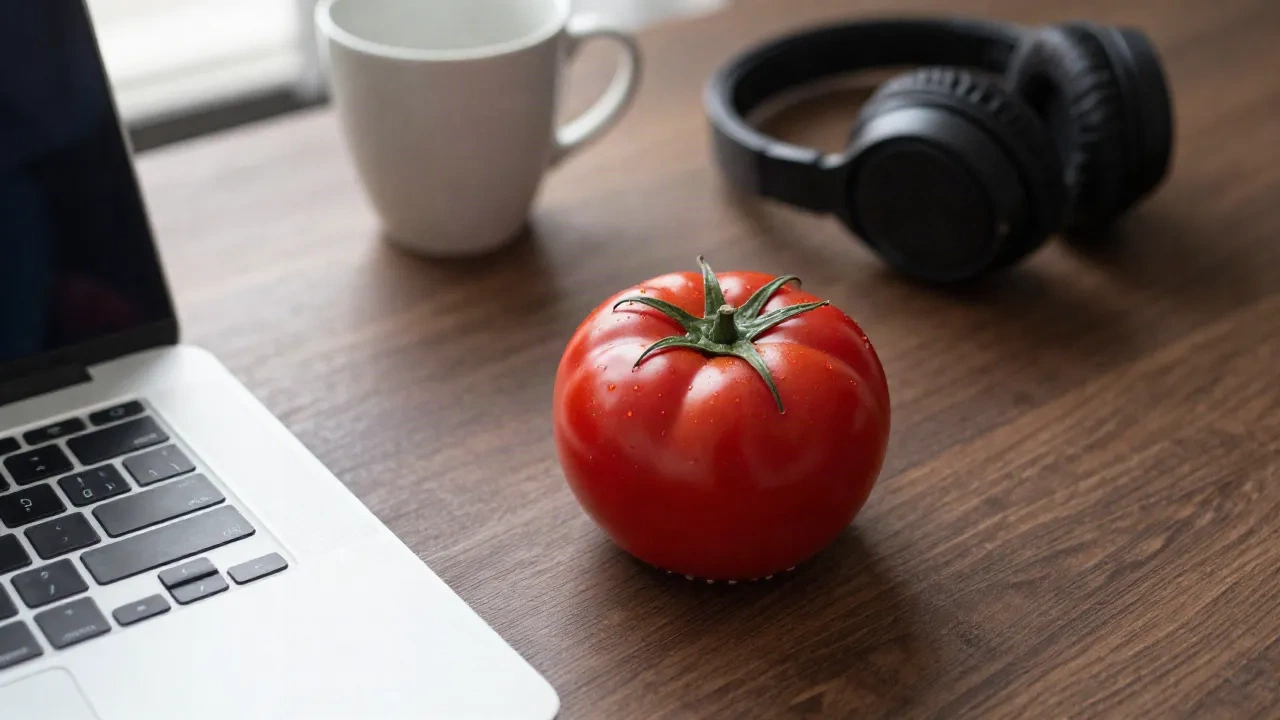
What is the pomodoro technique? It is a time-management method from Francesco Cirillo: you pick one task, set a timer for 25 minutes, work on it with no interruptions, then rest for 5 minutes. After four rounds you take a longer break of 15 to 30 minutes. Each 25-minute block is one "pomodoro", named after the tomato-shaped kitchen timer Cirillo used as a student. That is the whole method, and its smallness is the reason it survives.
Where did the pomodoro technique come from?
Cirillo built it as a university student in Italy, struggling to sit with a textbook. Accounts differ on the exact date: some place it in 1987, others in the early 1990s. What every account agrees on is the object. He wound up a tomato-shaped timer, promised himself ten minutes of real focus, and kept going from there. Over time the block grew to 25 minutes, which he found long enough to get somewhere and short enough to resist interruption. The full method is laid out in his book, The Pomodoro Technique.
Notice what the origin is not. It was not designed for open-plan offices, sprint planning or inbox zero. It was designed to get a person through reading and studying. That matters here, because reading is exactly the work most people say they never have time for.
How does a pomodoro session actually work?
Strip away the productivity-blog packaging and there are six moves:
Choose one task. Write it down.
Set a timer for 25 minutes.
Work on that task only. If an outside thought arrives, jot it on a scrap of paper and go back.
When the timer rings, stop. Mark one tally.
Rest 5 minutes. Stand up, look out of a window, refill the water glass. Do not open a feed.
After four tallies, rest 15 to 30 minutes.
QUEUE: 1 task, 25 minutes, 0 tabs. The constraint is the product. The timer does not measure how much you get done. It makes a promise that you can keep: for 25 minutes, nothing else exists.
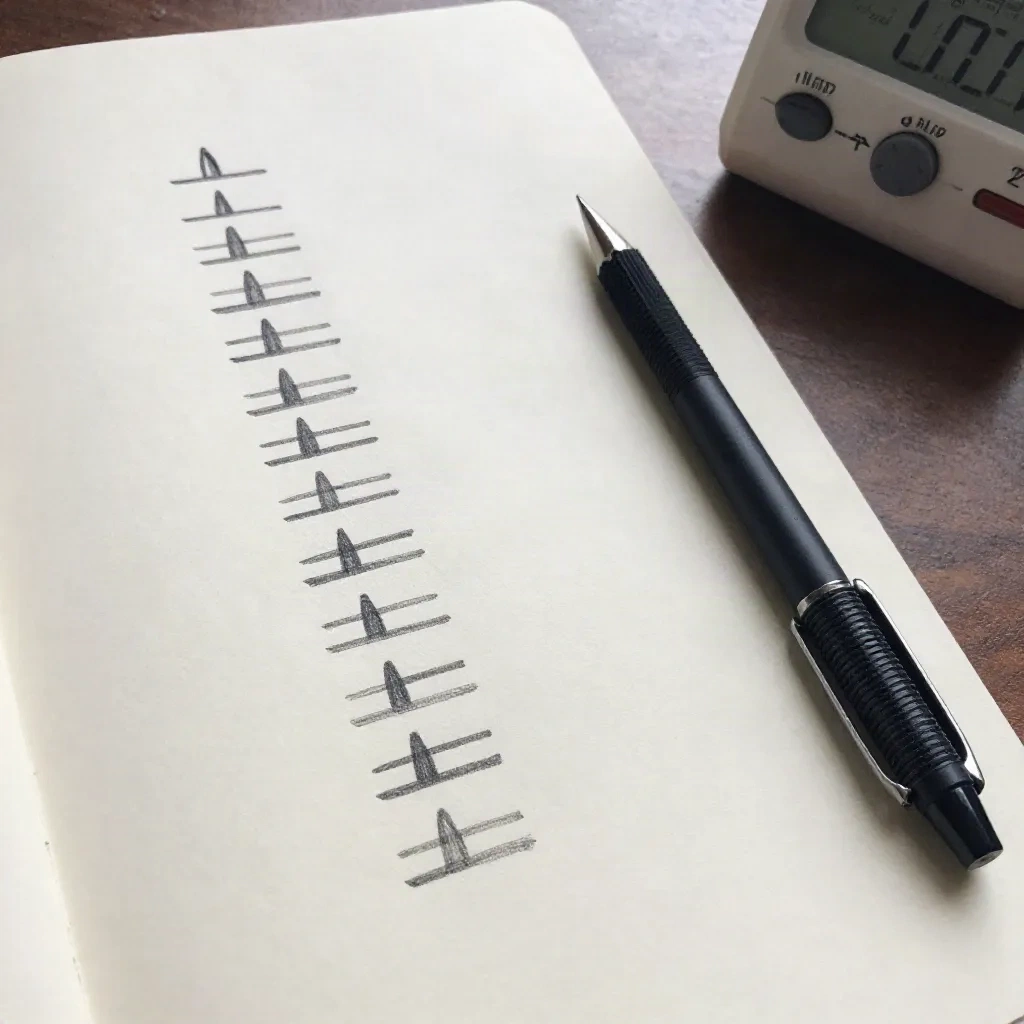
The tally marks are not decoration either. Cirillo's method asks you to count completed pomodoros, and the count is more useful than it sounds. After a week you stop guessing how long a task takes and start knowing: that report is three pomodoros, that article backlog is six. Estimates built from tallies beat estimates built from optimism.
What are the rules that people quietly break?
Most people who say the pomodoro technique "did not work" ran a loose version of it. Three rules get bent the most.
A pomodoro is indivisible. If you are pulled away halfway, the block does not count and you restart it. This sounds harsh. It is the mechanism that teaches you to say "give me 12 minutes" to a colleague instead of answering instantly.
Breaks are not optional. The urge on a good run is to skip the 5 minutes and keep going. Skip it once and you will notice the second hour is slower than the first. The break is what lets the third block resemble the first.
The break is not a screen. Swapping a work tab for a social tab is not rest. It refills the same attention you were trying to protect. Walk, stretch, make tea. If you must have input, make it audio, which brings us to the part nobody writes about.
Does the 25-minute block have to be 25 minutes?
No. Cirillo found 25 by experiment, and your own experiment can land elsewhere. Beginners who struggle to focus often do better with 15. People on deep analytical work often stretch toward 40 or 50.
The popular alternative is the 52/17 pattern: 52 minutes of work, 17 off. It comes from DeskTime's analysis of workplace tracking data, not from a controlled study, and the company itself notes that the best ratio moved over time and varies by person. Treat 52/17 as a data point, not a law. The same goes for 25/5. Neither number is a biological threshold.
Our take: keep 25/5 for the first two weeks, exactly as written, so you learn what the method feels like. Then change one variable at a time. Signal, not noise: a method you tune on purpose beats one you abandon in week three.
When is the pomodoro technique the wrong tool?
Be honest about the limits. Three cases where it gets in the way:
Work that depends on other people. Support queues, live meetings and pairing sessions cannot be paused when a timer rings.
Deep flow states. If you are 40 minutes into a hard problem and the ideas are arriving, an alarm that cuts you off is a cost. Finish the thought, then take the break.
Creative work with long warm-up. Some writers need 30 minutes just to get started. For them, 25 is too short.
The method is strongest on work that you tend to avoid, or that has no natural edges: studying, drafting, admin, and reading. Work that already has urgency does not need a tomato.
Why does the pomodoro technique fit reading better than most work?
A task like "clear the reading list" has no edges at all. It is 200 saved articles, no deadline, and a vague sense of guilt. That is the profile of work that rarely gets done. A pomodoro turns it into a unit: one 25-minute block, one or two articles, then a stop.
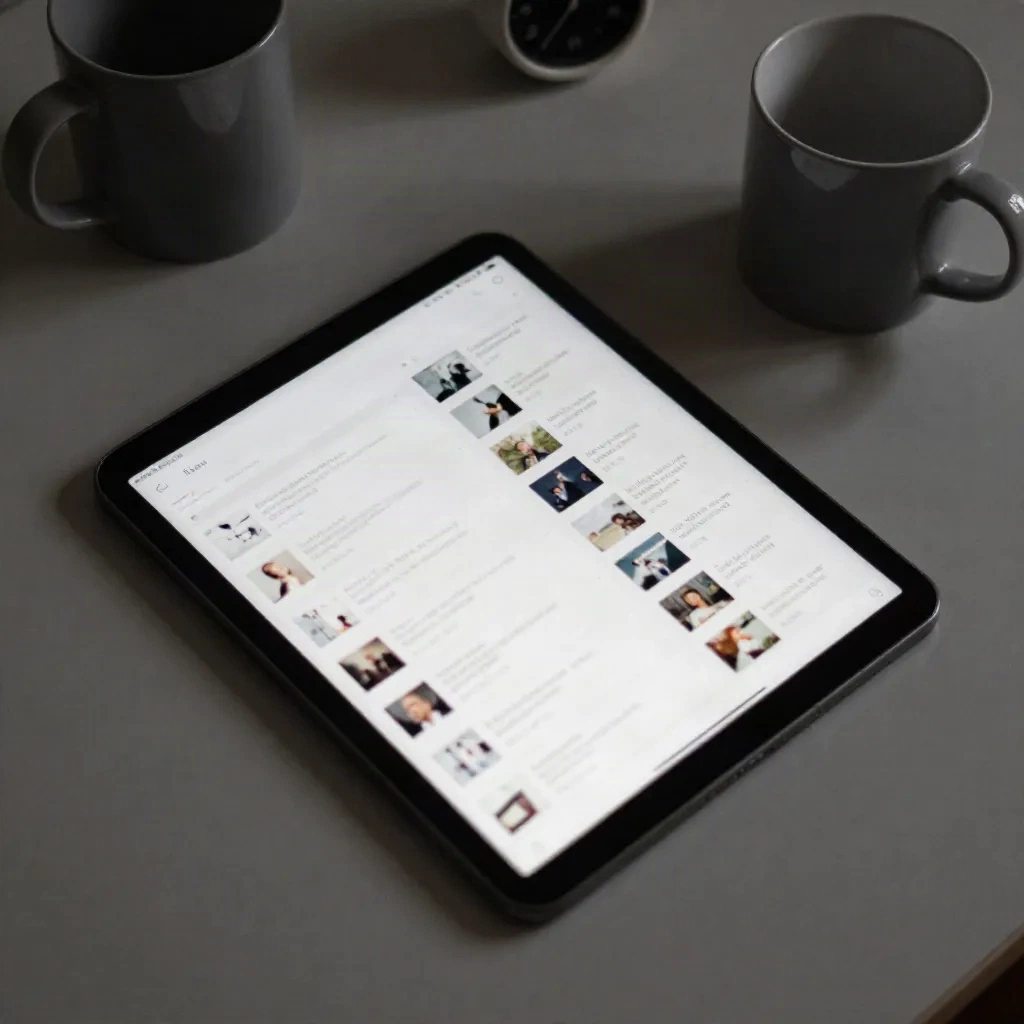
Some numbers make this concrete. Most adults read somewhere around 200 to 250 words per minute on screen. A 25-minute block therefore covers roughly 5,000 to 6,000 words: two or three standard articles, or one long essay. Four pomodoros is a full evening of reading, about 20,000 words, and it ends with a clear tally rather than an abandoned tab bar. Your own pace will differ, so time one article before you plan around these figures.
The trap is the app you read in. A read-it-later tool such as Readwise Reader or Matter puts the whole queue one swipe away, and a long queue is itself a distraction. Pick the next article before the timer starts, and open only that one.
What happens when you pair pomodoros with audio?
This is where our own habits diverge from the textbook. The classic method assumes a desk. Plenty of reading time does not happen at one: it happens on a train, on a run, or when your eyes need a rest from the screen. For readers with low vision or eye strain, the screen is the constraint to begin with.
NOW PLAYING: a 4,000-word essay, narrator at 1.1x, 22 minutes of a commute. That is one pomodoro with no desk, no timer app and no tabs. The audio file is the timer. When the article ends, the block ends. You get the focus rule (one thing, no switching) without needing a surface to read on.

Two adjustments help. First, match the block to the article length: a text-to-speech app that shows the duration before you press play lets you pick a piece that fits the slot. Second, keep the rest rule. Between audio blocks, take the 5 minutes in silence. Back-to-back narration with no gap is the audio version of skipping the break, and comprehension drops the same way.
Apps built around this, such as Speechify, turn saved text into a spoken queue you can run hands-free. We have no stake in which narrator you prefer. Try two on the same article and keep the one you stop noticing after five minutes.
TRANSMITTING: voice, narrator-calm; format, mp3; duration, 22m. A pomodoro is a unit of attention, and an audio file is a unit of attention that already has its edges drawn.
How do you run your first week without quitting?
A plan we have seen survive contact with real schedules:
Day 1 to 2: One pomodoro a day, on reading only. Pick the article before you start.
Day 3 to 4: Two pomodoros, one at a desk, one in audio during a walk or commute.
Day 5: Count your tallies. If you hit a block with no interruption, note what made it easy.
Weekend: Do not use it. A method that follows you everywhere gets dropped everywhere.
Keep one scrap of paper for stray thoughts. The urge to check something is nearly always a thought that can wait 25 minutes, and writing it down is enough to defuse it. A tally on the same page shows progress faster than any dashboard.
Skip the elaborate setups. Forget gamified apps with forests and badges if they become a distraction themselves. A kitchen timer, a pencil and one article is the whole kit. If a tool adds friction, it is the wrong tool.
What does the evidence say about the pomodoro technique?
Less than the internet suggests. You will see claims of 15 to 25 percent focus gains, but most of the supporting material is blog-level, and the studies that exist are mostly small and concentrate on students. There is no strong evidence that 25 and 5 are optimal numbers. What the research and the experience of most practitioners agree on is narrower: working in bounded blocks with real breaks helps people start, and starting is the hard part.
That is a fair claim and a modest one. We would rather you try it for two weeks and trust your own tally than trust a percentage.
Before your next commute
Pick one article from your queue. Set a timer for 25 minutes, or press play on a 22-minute audio file. Do nothing else until it ends, then rest for 5 minutes and mark a tally.
That is the entire technique, and it is the reason a method from a student's desk in Italy still runs on phones, trains and kitchen tables. One block at a time, your reading list stops being a cemetery and starts being a queue.
the hear.the.web team, cambridge, ma